The Mission
In February 2019, the research submersible Erebus was lowered into a trench that does not appear on most charts. It was scheduled to surface after ninety-seven hours. Its beacon is still transmitting.
The Abyssal Research Expedition was assembled to answer a narrow question: what maintains the heat anomaly at the floor of the Sonne Trench, where water two degrees warmer than physics predicts rises out of the sediment in slow, regular pulses. Seven survey missions mapped the approach. The eighth sent a crew.
Below six thousand meters the ocean stops behaving like a place and starts behaving like a condition. No light has ever reached the bottom of the trench. The pressure would collapse a rail car into foil. And yet the cameras kept finding things drifting in the beams, pale, deliberate, unbothered.
This site is the public record of expedition ARE-7: the descent profile, the vessel, and the transmissions received after hour ninety-seven. It is maintained exactly as the data arrived. Nothing has been corrected.
The Descent
Epipelagic
The sunlit skin of the ocean. For the first four minutes the crew could still see the hull of the support ship above them, a dark lens on a bright ceiling. Then the blue began to thicken.
Mesopelagic
The twilight zone. Color drains until only a memory of blue remains. Bioluminescent life starts answering the searchlights, brief green signatures firing back out of the dark, as if the water were checking who had arrived.
Bathyal
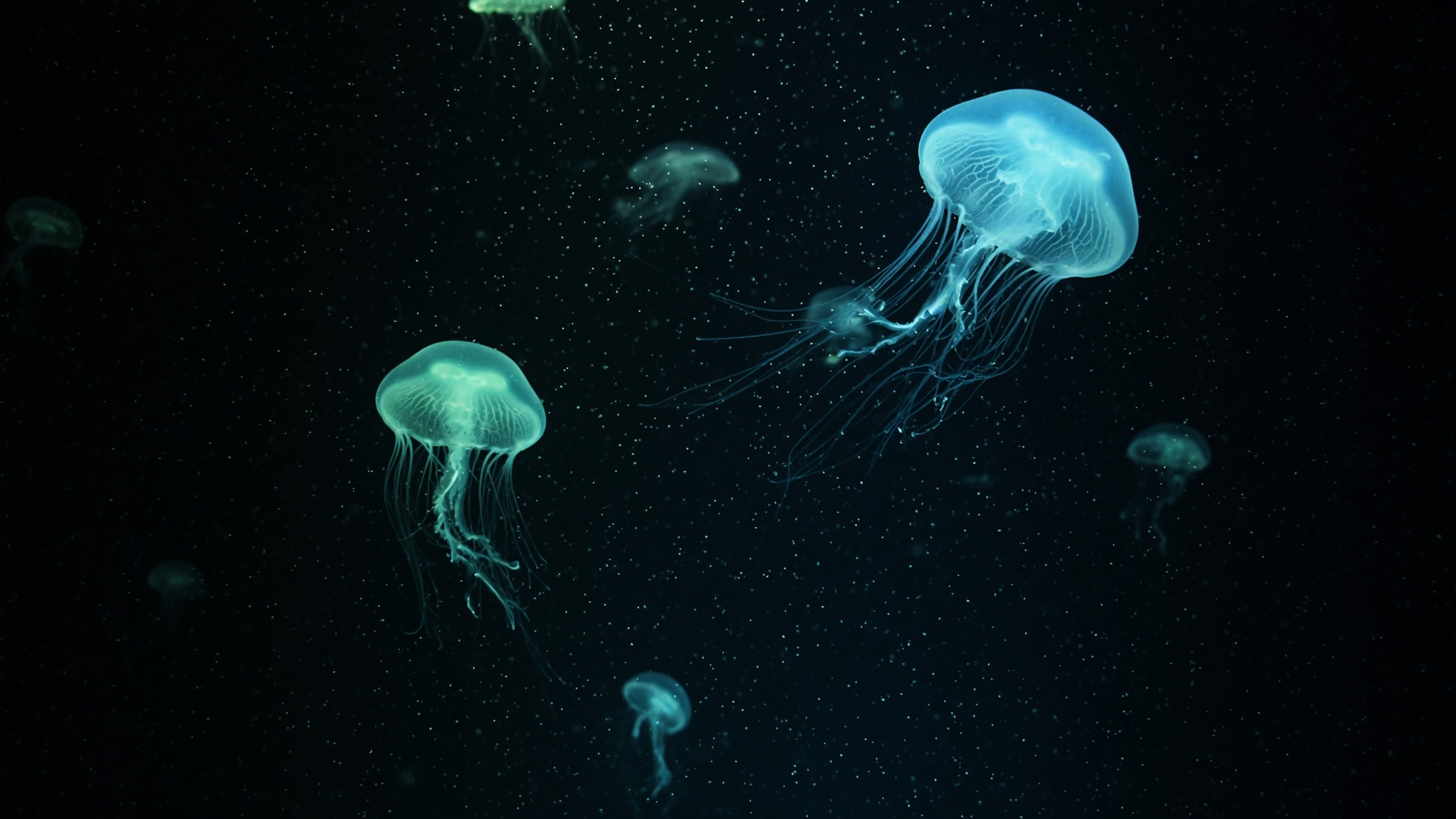
The midnight zone. Total, permanent darkness. Marine snow streams upward past the viewports, an illusion of ascent that pilots are trained to ignore. Outside, jellyfish the size of open umbrellas hang motionless in the beams.
Abyssal
The abyssal plain falls away beneath the trench mouth. Pressure here is four hundred times the surface. The sphere contracts by a measurable fraction of a millimeter, and the crew hears it, a single, patient note, like a struck bell settling.
Hadal
Named for Hades. Less is known about this trench than about the surface of Mars. At 8,200 meters the floodlights found the seabed, pale sediment, undisturbed for centuries, and a line of regular depressions leading away into the dark that the geology team declined to classify.
The Vessel
DSV Erebus was built for one purpose: to keep three people alive in a place where nothing else made by humans has ever remained intact. Her personnel sphere was forged in two hemispheres of titanium alloy and machined until the mating surfaces varied by less than the width of a bacterium. At depth, the ocean squeezes the sphere into an even more perfect shape.
Everything outside the sphere is sacrificial. The syntactic foam flotation, the thruster frames, the manipulator arms, all of it is engineered to be crushed gracefully, deforming around the crew rather than against them. Photographed after two thousand days on station, her hull streaked and blooming with mineral corrosion, she has stopped looking like an instrument. She looks like something the trench is slowly claiming.
BUILDER · Meridian Deepworks, Yard 4
LAID DOWN · 2014 · Launched 2017
CREW · 1 pilot · 2 observers
STATUS · On station · unrecovered
Signals
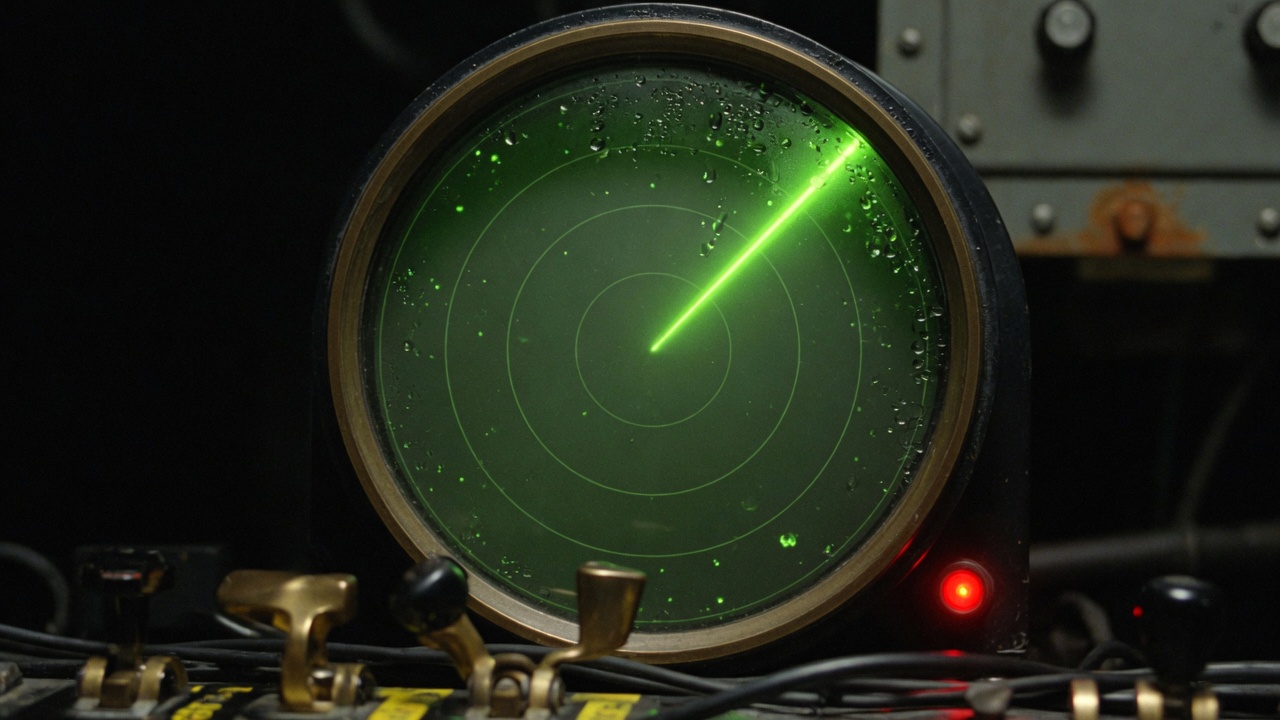 HYDROPHONE WATCH · SCOPE 2 · 8.8 KHZ RETURN
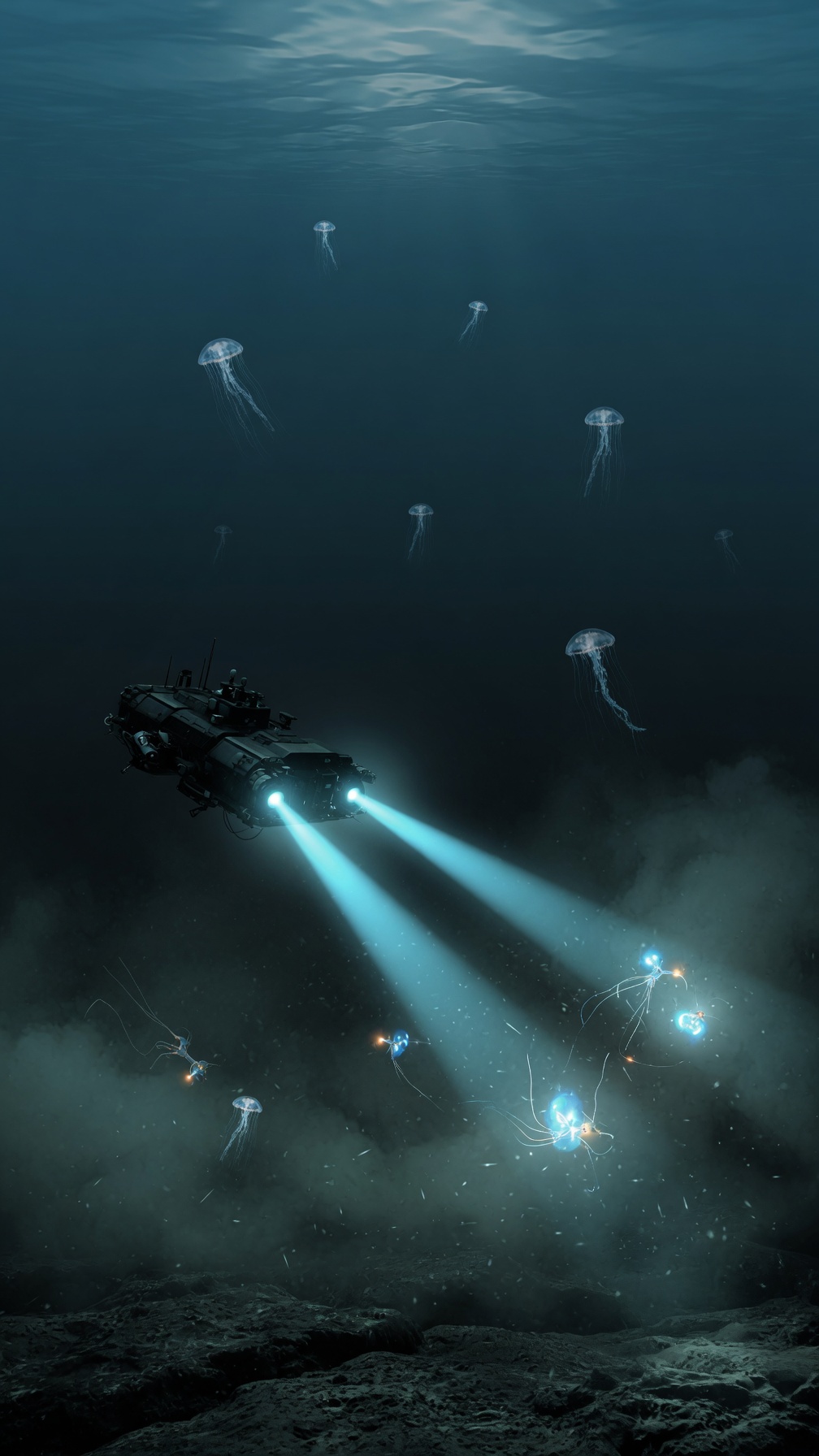 FRAME 41-207 · FINAL CONFIRMED IMAGE
Acoustic modem transcript · received after loss of scheduled contact · unedited
Scheduled ascent window open. Erebus, confirm ballast drop. Weather on top is holding for you.
Negative on ascent this window. Extending bottom time. The vents are pulsing at thirty-four second intervals. It is the same interval as our beacon. It was pulsing before we arrived.
Lights off for the last hour to conserve amps. Note for the biology team: the glow on the seabed is brighter when the lights are off. It is arranged in lines. Lines meet at the depressions.
…sphere is fine, crew is fine, stop asking. Something large moved between us and the vent field. Not silhouette, it occluded the glow. Estimate ██████████ meters. We are going to stay very still now.
It is not a vent field. Tell the committee the heat anomaly is resolved. Tell them the trench is ████████████████. Do not send the second vehicle. We were not the first ones down here.
Surface Support
Eight thousand two hundred meters above the beacon, the research vessel Meridian holds position over a point on the ocean that looks like every other point on the ocean.
She was the ship that lowered Erebus into the water, and she is the ship that was supposed to lift her back out. Her dynamic positioning system has kept her within a forty-meter circle of the drop coordinates through cyclone seasons, crew rotations, and three separate orders to return to port, each of which was quietly rescinded after the hydrophone operators filed their logs.
The A-frame crane on her stern is still rigged with the recovery cradle. The deck crew repaints its markings every spring. Nobody aboard calls it superstition. At night her floodlights stay pointed at the water, and the watch officers keep the channel open, one pulse every thirty-four seconds, rising through eight kilometers of dark, arriving on time.
Recovered Material
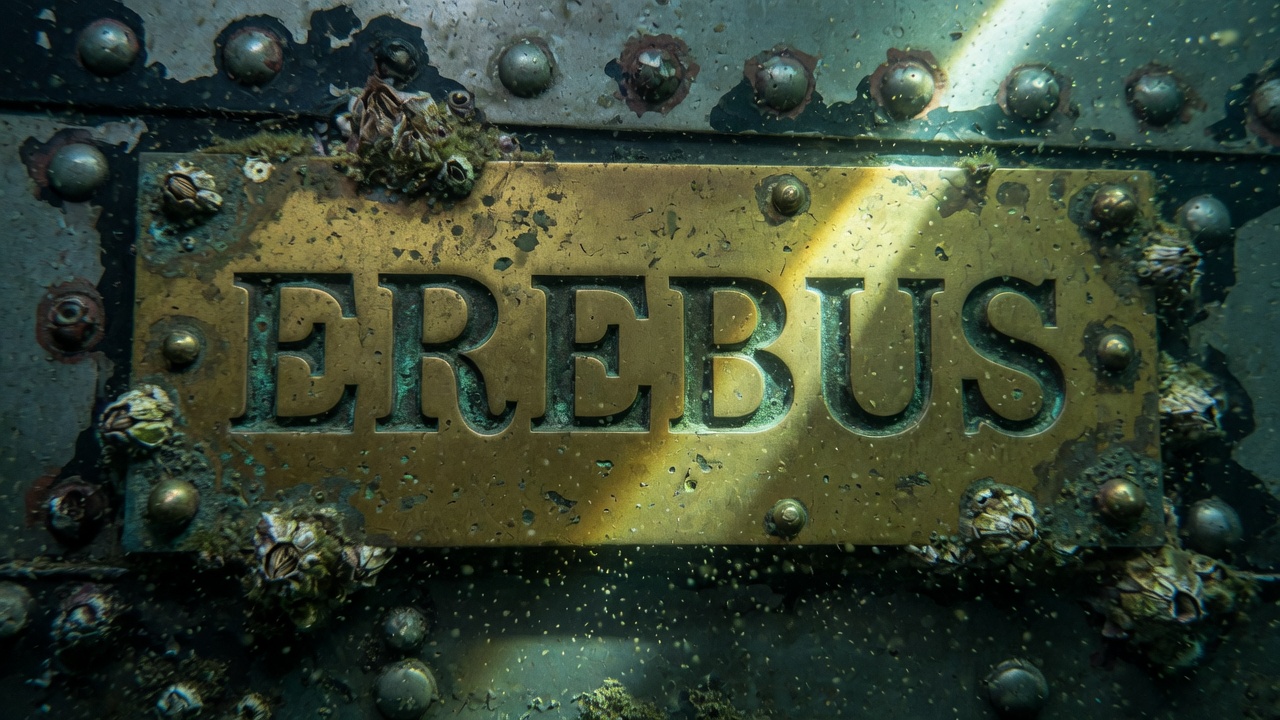
Recovered by ROV from the trench lip, 340 meters from the vessel. Metallurgy dates the corrosion to roughly sixty years of seawater exposure. The vessel has been down for seven.
Nineteen months of electrolytic conservation stripped the concretion without disturbing the engraving. The lettering beneath is crisp, machine-cut, and reads EREBUS, but the tooling profile matches no cutter in the builder's yard records, and the alloy predates the vessel's keel by decades.
Water samples drawn above the "vent field" contain no volcanic signature whatsoever. The heat source is chemically silent, warm, clean water rising through cold, on a thirty-four second cycle.
CYCLE 34.0 s · REGULARITY σ<0.01
The beacon still pulses from 8,200 meters, every thirty-four seconds. In 2023 its position shifted 1.9 kilometers along the trench axis over six weeks. Nothing pulled it. Erebus has no power for that.
STATUS · TRANSMITTING · MONITORED
In 2024 the array recorded a second signal beneath the beacon, same 8.8 kHz carrier, same 34-second cadence, offset by exactly half a period. Two clocks, keeping time with each other.
ORIGIN · BELOW THE SEABED